


AuDHD Women and Burnout Recovery

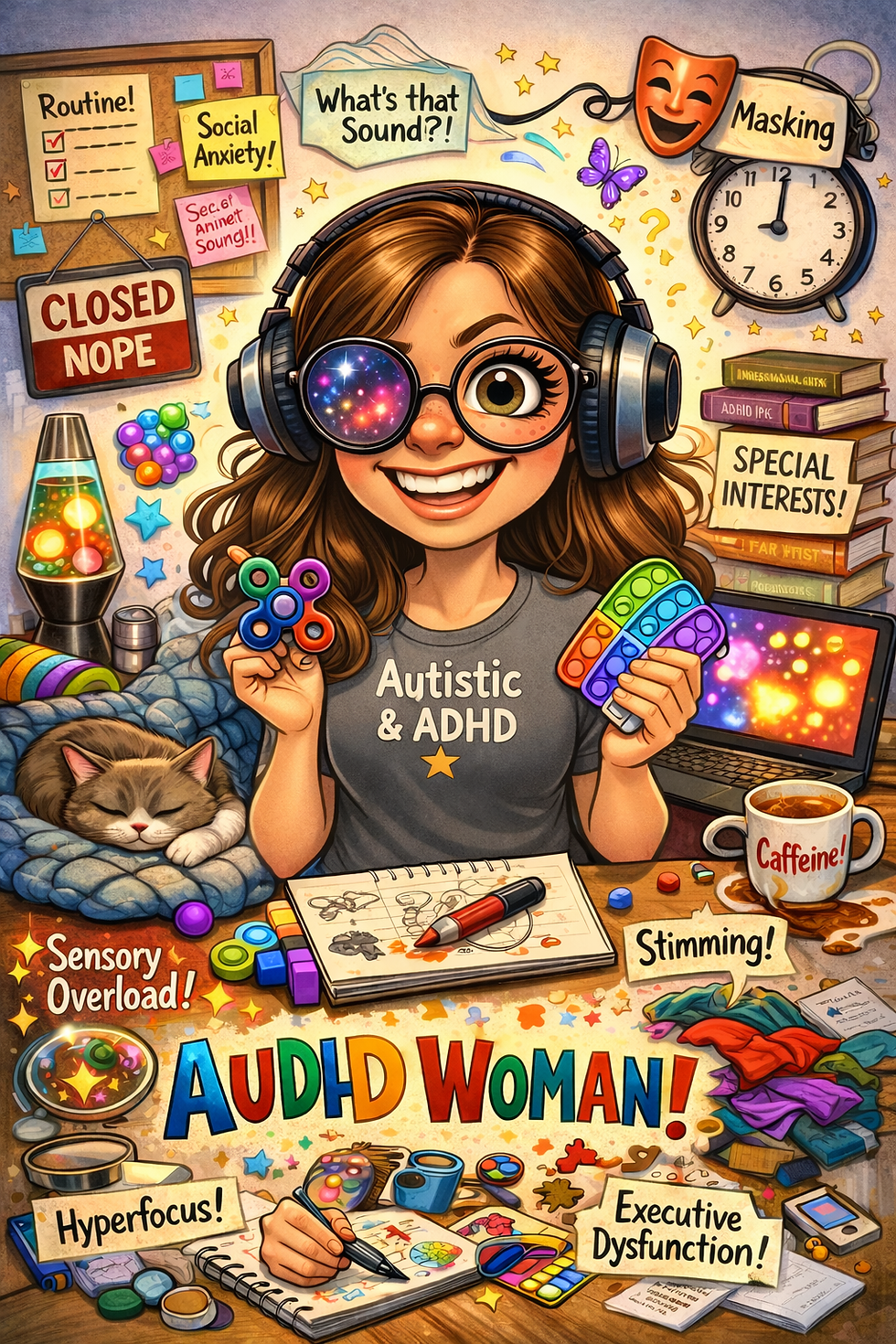
Menopause, hormones, autoimmune load, energy accounting, executive functioning, and neuro-affirming wellness for AuDHD Women
If you’re an adult woman with both autism and ADHD (AuDHD), burnout can feel like your whole system has run out of fuel — not just “tired,” but overdrawn. Your brain gets foggy. Your sensory threshold drops. Your emotions feel closer to the surface. Tasks that used to be manageable suddenly feel impossible.
In a neuro-affirming frame, burnout isn’t a personal failure. It’s often your nervous system saying: “The demands are higher than the support and recovery I’m getting.”
And for many AuDHD women, burnout is intensified by two big realities:
Hormones fluctuate (cycle changes, perimenopause, menopause), and this can change attention, sleep, emotional regulation, sensory tolerance, and stamina.
Many of us also carry chronic health load — including autoimmune conditions like Hashimoto’s — which can lower baseline energy and slow recovery.
This post brings everything together into one clean, practical, neuro-affirming recovery guide you can actually use, especially when your capacity is low.
Why AuDHD burnout hits women differently
AuDHD often means you’re running two systems at once:
ADHD: time blindness, dopamine seeking, task initiation struggles, emotional intensity, difficulty stopping once you’ve started.
Autism: sensory processing differences, higher processing load in social environments, a need for predictability, and a higher cost for constant change.
Add common life pressures:
Masking/camouflaging (performing “fine,” “easy,” “capable” at a cost)
Perfectionism and inner-critic pressure
Gender role expectations (invisible household and emotional labour)
Hormonal shifts (cycle, perimenopause, menopause)
Autoimmune / inflammation load (fatigue, pain, sleep disruption, brain fog)
Burnout is often the result of high demand + low recovery over time.

Signs you might be in AuDHD burnout
Emotional signs
feeling drained most of the time
overwhelm that doesn’t lift even after rest
wanting to drop everything and run away
detachment, loneliness, numbness, withdrawal
cynicism, negative loops, increased self-criticism
anxiety/on-edge feeling
feeling helpless or “stuck”
difficulty switching off your mind
Physical signs
insomnia or broken sleep
headaches/migraines
jaw clenching, neck/shoulder tension
gut issues
frequent illness
aches, inflammation-like discomfort
Neuro-affirming reframe: these are signals of overload, not proof that you’re “not coping.”
Menopause and fluctuating hormones can make AuDHD burnout in women worse
Many AuDHD women notice that during hormone shifts (monthly cycle changes, perimenopause, menopause), the following can intensify:
Executive functioning dips (planning, memory, task initiation, switching tasks)
Emotional regulation gets harder (irritability, overwhelm, rumination)
Sensory sensitivity increases (noise, lights, social density feel more intense)
Sleep becomes fragile (and sleep loss multiplies burnout fast)
Energy becomes less predictable (some days you’re “fine,” then crash)
Neuro-affirming takeaway: your capacity may genuinely change across the month and across life stages. Recovery isn’t about forcing consistency. It’s about planning like your biology is real — because it is.
Autoimmune load (like Hashimoto’s) and burnout
Many AuDHD women also manage autoimmune or chronic conditions. Even when symptoms are “managed,” chronic health load can mean:
lower baseline energy
more sensitivity to stress
slower recovery after busy periods
increased impact from poor sleep
more frequent “body alarms” (headaches, gut flares, recurrent illness, pain)
This doesn’t mean you’re broken. It means your nervous system and body may need more buffers, more pacing, and more support than the average wellness advice allows for.

The AuDHD Burnout Recovery Plan
Eight steps to break the exhaustion cycle — without shame
Think of your recovery like tending a garden. Not forcing growth — restoring conditions: light, water, nutrients, safety, and gentle pacing.
1) Question the roots of burnout (no blaming, just clarity)
Burnout recovery starts with identifying what’s costing you the most.
Try a 5-minute “root check”:
What are my top 3 drainers right now?
What triggers me to overwork? (fear, guilt, rejection sensitivity, imposter feelings?)
Where am I expecting neurotypical output from a neurodivergent nervous system?
What have I been tolerating that my body has been protesting?
Tiny tool: name your inner critic voice. When it says “you’re not doing enough,” try:
“Thanks, Critic. I hear you. Rest is a need, not a reward.”
2) Switch to “Low Power Mode” on purpose
When you’re burnt out, pushing harder drains you faster. A temporary simplification season can be protective.
Create a Minimum Viable Day (3–5 essentials):
eat something (protein helps)
hydrate
one hygiene step
one tiny reset (2 minutes tidy or fresh air)
one nervous system support break
Everything else becomes: delay, delegate, downgrade, or delete (for now).
Core rule: If it’s worth doing, it’s worth doing halfway.
3) Build a “Nervous System Menu” (so you don’t have to think)
When executive functioning is low, choices feel like work. A menu makes support automatic.
Pick a few options that actually work for you:
Quick resets (30–90 seconds):
long exhale breathing (inhale 4 / exhale 6) x 5
unclench jaw + drop shoulders
feet on floor: name 5 things you see
Sensory supports (2–10 minutes):
earplugs / noise-cancelling headphones
dim one light (avoid harsh overheads)
weighted blanket / firm pillow hug
warm drink or warm shower
sit outside with no scrolling
Movement that regulates (2–15 minutes):
slow walk, stretching, rocking, pacing
wall push (hands into wall for 30 seconds)
gentle music + sway
Connection (only if it restores you):
text a safe person: “Low capacity day. Can you check in later?”
body doubling: be near someone while doing separate tasks
4) Set boundaries that are realistic for AuDHD
Big boundaries can feel impossible in burnout. Start with micro-boundaries you can repeat.
Examples:
“I can do that, but not today.”
“I can give 10 minutes, not an hour.”
“I’ll reply tomorrow.”
“I’m offline after 6pm.”
“I can come, but I’ll leave early.”
AuDHD boundary upgrade: reduce task-switching. Multitasking can feel stimulating, but it often burns capacity fast. Choose one “lane” at a time whenever you can.
5) Ask for help — and accept it without guilt
AuDHD women often survive by being hyper-capable. Asking can trigger shame or rejection sensitivity. Make it easier by making it specific.
Create a Help Menu:
“Can you do supper tonight?”
“Can you take the school lift on Tuesday?”
“Can you handle this phone call for me?”
“Can you sit with me while I do admin?”
“Can you fold laundry while I rest?”
Receiving help is not dependence. It’s access needs being met.
6) Use energy accounting (the skill that prevents relapse)
Energy accounting means budgeting your capacity so you stop overdrafting your nervous system.
2-minute daily energy check-in:
Starting energy today (0–10): ___
Must-do (1–3 items): ___
Likely drains: social / admin / sensory exposure / decision-heavy tasks
Restorers I will schedule: ___ (choose 2)
Golden rule: after a high-cost task, schedule a restorer.
This is how you break the push–crash cycle: you plan recovery as part of the plan, not as an emergency response.
7) Support executive functioning (burnout-friendly scaffolding)
In burnout — especially with hormone shifts — planning, memory, initiation, and switching get harder. Don’t “try harder.” Add scaffolding.
Try:
Externalize your brain: one visible list (not five apps)
Timers for starting, not just finishing
Minimum viable steps: “Put 5 things away” counts
Reduce transitions: group errands, add buffers between tasks
Body doubling: do tasks alongside someone
Default routines: same breakfast, outfit formula, simple repeatable systems
The goal is less friction and fewer decisions — because decisions cost energy.
8) Practice neuro-affirming self-care and wellness (nervous system first)
Self-care for AuDHD is not aesthetic. It’s capacity protection.
Use this Wellness Stack on low-capacity days (choose one per column):
Body basics
water
protein
meds/supplements as prescribed
sunlight/fresh air for 2 minutes
Sensory safety
earplugs/headphones
dim lights
comfy clothes
reduce background noise
Regulation
long exhale breathing
warm shower or cool splash
gentle movement
Connection (if restoring)
one message to a safe person
one small request for help
Boundary
one “no”
one “not today”
one “I’m done for today” time
Self-compassion (not fake, just kind)
“Even though I’m overwhelmed and exhausted, I choose care over criticism. I’m allowed to rest. I’m allowed to need support. This is a season, not my forever.”
A menopause- and autoimmune-aware planning note
If your hormones are fluctuating (cycle changes, perimenopause, menopause), plan by capacity — not time.
For two weeks (or a full cycle if relevant), track:
energy 0–10
sensory load 0–10
sleep quality
one drain + one restorer
cycle phase / symptom shifts
Then plan:
important tasks on higher-energy windows when possible
lighter days on lower-energy windows
buffers after social or sensory-heavy events
more recovery time during flares or fatigue spikes
This is not “giving in.” It’s aligning your life with your nervous system.
Closing: you are not broken — you are overextended
AuDHD women often become experts at coping. Burnout isn’t failure; it’s your body withdrawing consent from impossible expectations.
Recovery doesn’t come from forcing bloom. It comes from restoring conditions: less pressure, more support. less masking, more safety. less noise, more nourishment.


Comments